
SSA Insights · November 2026
When Partners and Employees See Benefits Differently
Why professional services firms need to consider both perspectives when designing employee benefits.
At many law firms, accounting firms, and other professional services businesses, partners have the final say on employee benefits. They approve the budget, weigh the options, and ultimately decide what the firm will offer.
But the people making those decisions may experience the benefits program very differently from the employees who depend on it.
A plan that works well for a partner may not be the best fit for employees with different financial circumstances and healthcare needs. That doesn't mean either group has the wrong priorities. It means a firm's benefits strategy needs to account for both.
Partners and Employees Aren't Always in the Same Position
The differences go beyond compensation.
Depending on how a firm is structured, partners and certain owners may be subject to different tax rules for health benefits. Those distinctions are worth reviewing with the firm's CPA, particularly when ownership or partnership arrangements change.
But the more immediate consideration is how financial circumstances, healthcare needs, and expectations influence what people value in a benefits program.
The Partner Perspective: Coverage and Income Protection
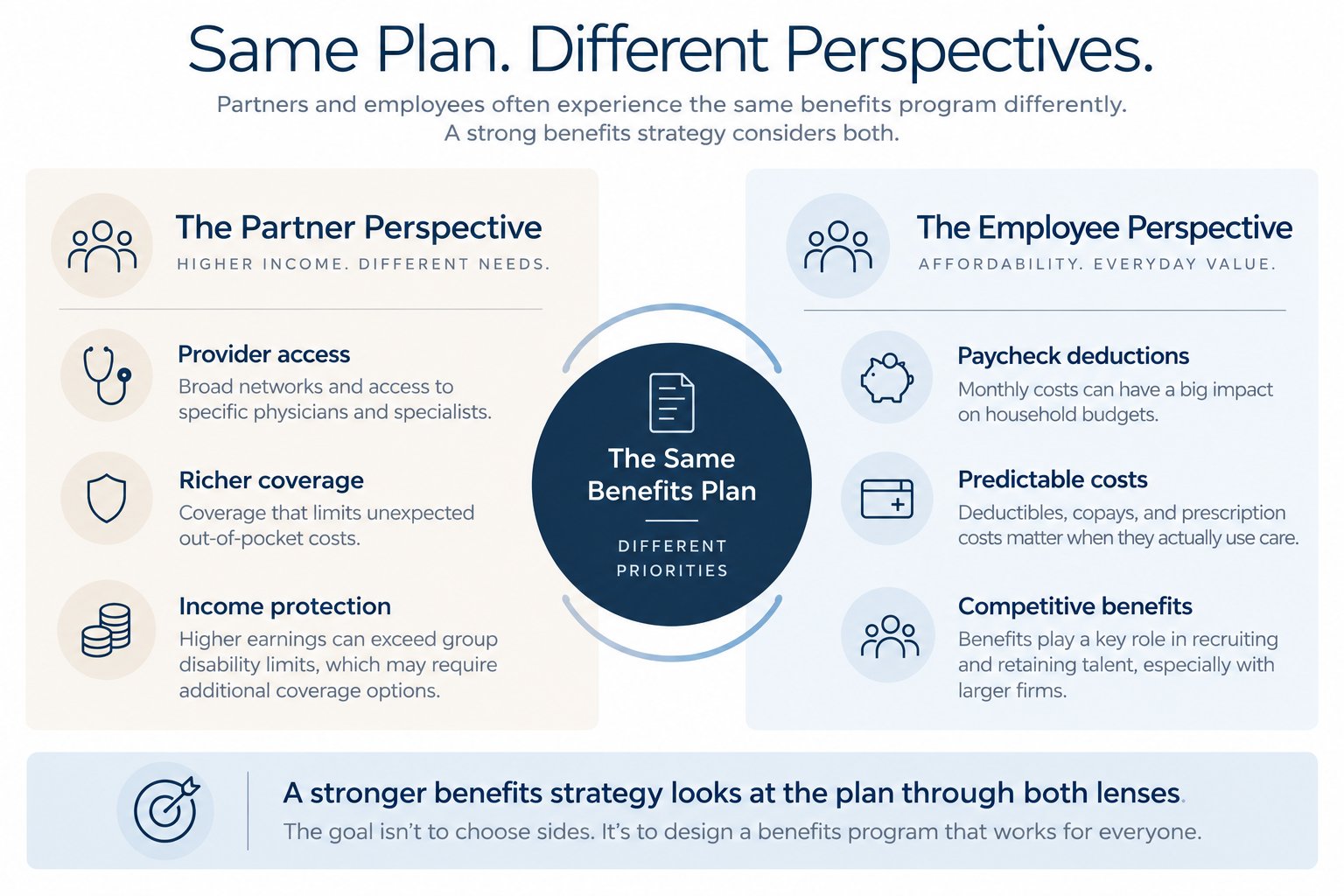
Partners may place a high value on broad provider networks, access to specific physicians and specialists, and coverage that limits unexpected out-of-pocket expenses.
They may also have income-protection needs that aren't adequately addressed by the firm's standard benefits package.
Consider long-term disability insurance. Group policies typically have a maximum monthly benefit. While that limit may provide adequate income replacement for many employees, it can leave a highly compensated partner with a significant coverage gap.
There are several ways to address that gap. Depending on the firm's structure and the coverage available, options may include enhanced group LTD benefits for designated leadership positions, a separate management disability plan, or supplemental individual disability insurance. The right approach depends on income levels, eligibility, cost, and how the coverage works with the firm's existing benefits.
These options illustrate an important point: not every partner need has to be addressed through changes to the benefits offered to the entire firm.
The Employee Perspective: Affordability and Everyday Value
Employees may evaluate the same benefits program through a different financial lens.
Monthly paycheck deductions, deductibles, copayments, and the cost of covering dependents can have a substantial impact on household budgets.
For example, a higher-deductible health plan may seem like a reasonable way to manage premiums. But an employee with less disposable income may struggle with the upfront cost of care, even if the monthly contribution is lower.
These differences matter when firms are competing for talent. An associate weighing two job offers or an experienced paralegal considering a move may look closely at what benefits will actually cost their family, not simply whether health insurance is offered.
Of course, employees aren't all alike. A senior accountant, a new associate, and an administrative professional may have different needs and financial priorities. The goal isn't to assume everyone values the same things, but to understand where the greatest pressures exist.
Designing Benefits with Both Perspectives in Mind
A firm doesn't necessarily need separate benefits programs for partners and employees. It needs a strategy that considers how different people will use and pay for their coverage.
A few practical considerations can help:
- Evaluate employee contributions carefully. Look beyond the employer's share of the premium. Consider what employees at different salary levels will actually pay each month, particularly for dependent coverage.
- Offer meaningful choice where practical. Depending on carrier options, participation requirements, and budget, offering more than one medical plan may allow employees to select coverage that better fits their circumstances.
- Address specialized protection needs separately. Enhanced group disability coverage or supplemental individual policies may help protect highly compensated partners and other key professionals without requiring changes to the core medical program, subject to applicable eligibility and tax rules.
- Review changes from more than one perspective. Before increasing deductibles, changing networks, or adjusting contributions, consider how the decision will affect both partners and employees.
Keep the Right Advisors Involved
At partner-owned firms, benefits decisions can intersect with tax treatment, compensation, and ownership structure. Your CPA and benefits advisor should understand how those pieces fit together, especially when partners join or leave the firm or ownership arrangements change.
Just as important, benefits decisions should reflect the experiences of the people who rely on the coverage every day.
Partners and employees don't have to value every aspect of a benefits program equally. But the people making the decisions should understand how those decisions affect everyone covered.
A thoughtful benefits strategy starts by recognizing those differences, rather than assuming one perspective represents the entire firm.
Is your benefits strategy built for both perspectives?
We'll help you look at your program through the eyes of partners and employees alike.
Book a consultation