
SSA Insights · November 2026
The Hidden Costs of Changing Health Insurance Carriers
Why the lowest premium isn't always the best financial decision for employers.
When your company's health insurance renewal comes in higher than expected, shopping for a new carrier is a natural response. And when another carrier offers a lower premium, the potential savings can be difficult to ignore.
But before making a change, it's worth looking beyond the initial numbers.
Switching carriers can be a smart financial decision, sometimes delivering meaningful savings and better coverage options. Other times, the apparent savings come with trade-offs that aren't immediately obvious. The key is understanding what you're gaining, what you're giving up, and how the decision could affect your business beyond the first year.
Are You Comparing the Same Coverage?
A lower premium doesn't always mean you're getting the same benefits for less money.
One carrier may offer a less expensive plan with a higher deductible, different copayments, or greater out-of-pocket exposure. Prescription drug coverage may also differ, particularly for employees who rely on specialty medications.
These differences matter because savings on the employer's side can translate into additional costs for employees.
Before comparing premiums, make sure you're comparing similar plan designs. If the lower-cost option shifts more expenses to employees, that's a financial decision worth making deliberately, not discovering after the change.
What Happens After the First Year?
An attractive first-year premium doesn't necessarily translate into long-term savings.
Health insurance rates change over time, and the carrier offering the lowest premium today may not remain the most competitive in future years. For California's smaller employers, rates are generally based on regulated factors such as age and geographic location, while larger groups may have more customized pricing arrangements.
For some larger groups, carriers may offer particularly competitive initial pricing to attract new business. That makes it important to understand whether any multi-year rate guarantees or limits on future increases are available, and what conditions apply.
Regardless of company size, the goal is to look beyond the first-year savings. A carrier change should make financial sense not just at the time of the decision, but with a reasonable understanding of how costs could evolve.
What Additional Changes Come with a Carrier Switch?
Beyond the financial considerations, changing carriers can affect both employees and the people responsible for administering benefits.
A new plan may offer attractive pricing but exclude physicians, hospitals, or specialists employees currently use. Prescription formularies can also differ, potentially affecting medication costs or access. For employees managing chronic conditions or undergoing treatment, these changes can be especially significant.
There may also be additional work behind the scenes. While every benefits renewal involves coordinating enrollment, updating payroll deductions, and communicating with employees, switching carriers can introduce new requirements. These might include establishing carrier connections with benefits administration systems, transferring enrollment information, or helping employees navigate unfamiliar processes.
A well-managed transition can minimize disruption, but employers should understand what changes employees may experience and what additional coordination will be required. A good benefits advisor will anticipate potential challenges, explain what to expect, and help manage the transition from start to finish.
Neither staying nor switching should be the automatic choice.
When Does Switching Make Sense?
Sometimes the answer is straightforward. A new carrier offers substantial savings, comparable or better coverage, a strong provider network, and acceptable long-term pricing terms. In that situation, switching may be the right decision.
In other cases, the savings are modest, the coverage changes are significant, or the financial advantages are less certain beyond the first year.
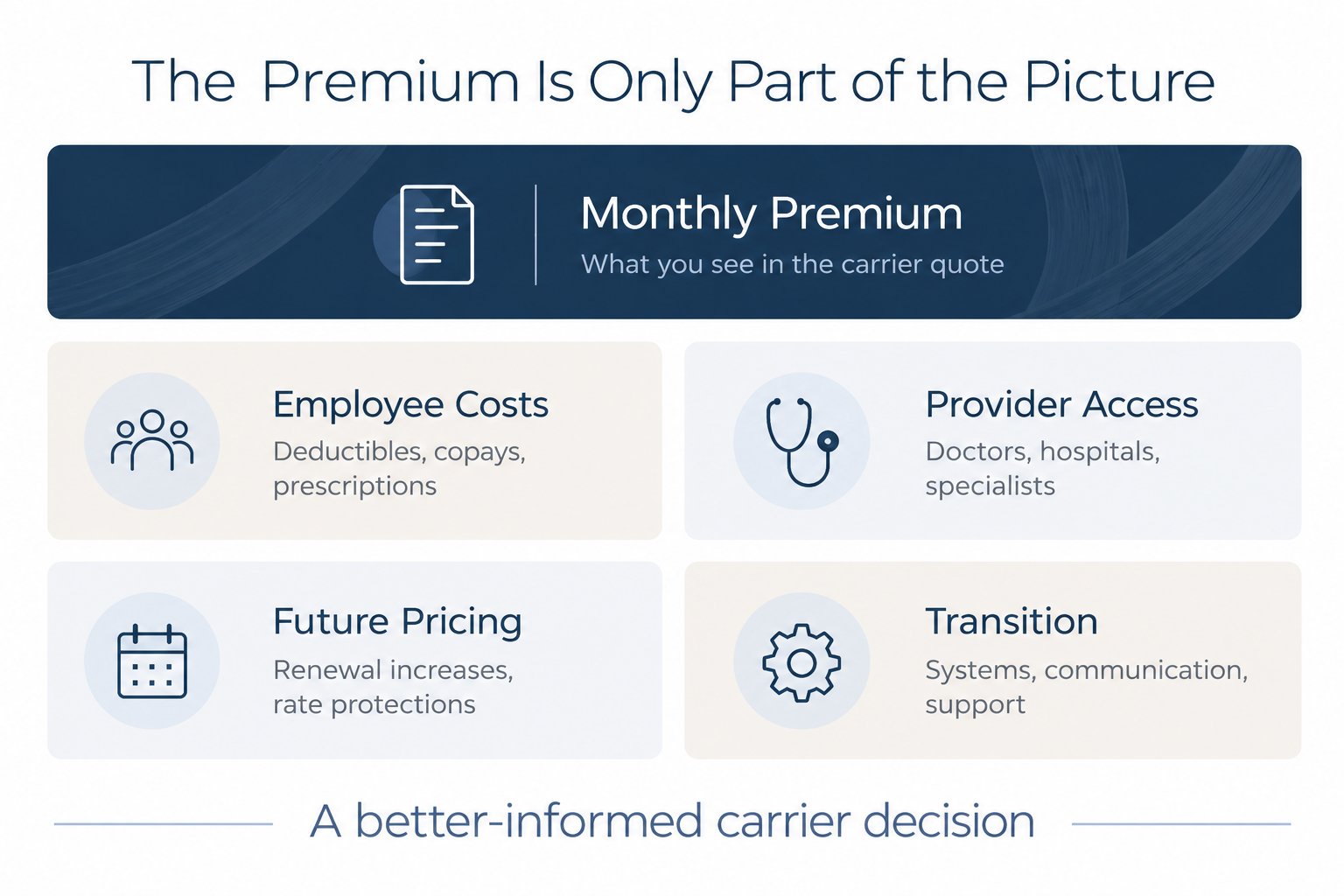
The most useful comparison considers the full picture: employer costs, employee affordability, provider access, future pricing considerations, and the work involved in making a change.
The goal isn't to avoid changing carriers. It's to make sure a change delivers what you're expecting. A lower premium is a good reason to explore your options, but the best decision is one that holds up when you look at coverage, employee needs, and the financial picture beyond year one.
Weighing a carrier switch for your next renewal?
We'll help you compare the full picture, not just the premium, before you decide.
Book a consultation